
Start a Clarksville Residents Search
Clarksville does not have one official list of everyone who lives in town. The useful record depends on the question. A Montgomery County property card can connect a parcel to an assessed owner and a transfer reference. A court search can show a public party association with a case. A directory volume can place a name at an address in a particular year. Each source answers a different, narrower question, and none should be treated as a complete present-household list.
Write down the name spelling, an address if known, and the year or date range before searching. Then keep record identifiers together. A parcel number, deed book and page, court case number, or archive call number gives the next office a way to locate the same item. This simple habit prevents a common surname or a mailing address from becoming an unsupported claim about a person.
- For an address or ownership question, search the Montgomery County property card and record the parcel ID, situs address, mailing field, and transfer reference.
- Use the transfer reference with the Register of Deeds, whose legal index is arranged by grantor and grantee rather than street address.
- For a public case question, use the court and date range that fit the event, then retain the case number and court type.
- For an older household, ask the library or Archives for a dated directory, yearbook, probate, deed, obituary, or census lead.
- When a public record is not online, ask its custodian for the counter, copy, mail, email, or Tennessee Public Records Act route.
Clarksville Resident Records Counters
Most Clarksville resident records are kept by Montgomery County offices. The Assessor is the practical address-to-parcel starting point. The Register is the recorded land-document custodian. The Election Commission can assist with registration questions and the Archives takes over when a record falls outside a live portal. The city, county, and state each keep different records, so a city tax bill, a county parcel card, and a recorded deed should never be treated as the same record.
Montgomery County Register of Deeds
350 Pageant Lane, Suite 101-A
Clarksville, TN 37040
931-648-5713
Montgomery County Assessor
350 Pageant Lane, Suite 101-C
Clarksville, TN 37040
931-648-5709
Montgomery County Election Commission
350 Pageant Lane, Suite 404
Clarksville, TN 37040
931-648-5707
Clarksville Resident Parcel Cards
The live Spatialest property card is the county's best first stop for an address. It can show a property address, assessed owner, separate mailing address, parcel ID, subdivision and lot details, values, and a transfer panel. That transfer panel can include an instrument date, book and page, instrument type, grantor, grantee, sale information, and a sales reference. The card is a parcel and assessment record, not proof that a named owner occupies the site.
The property-search interface illustrates the address, owner, and parcel starting point for a Clarksville residents directory question. Capture the identifiers before leaving the card.
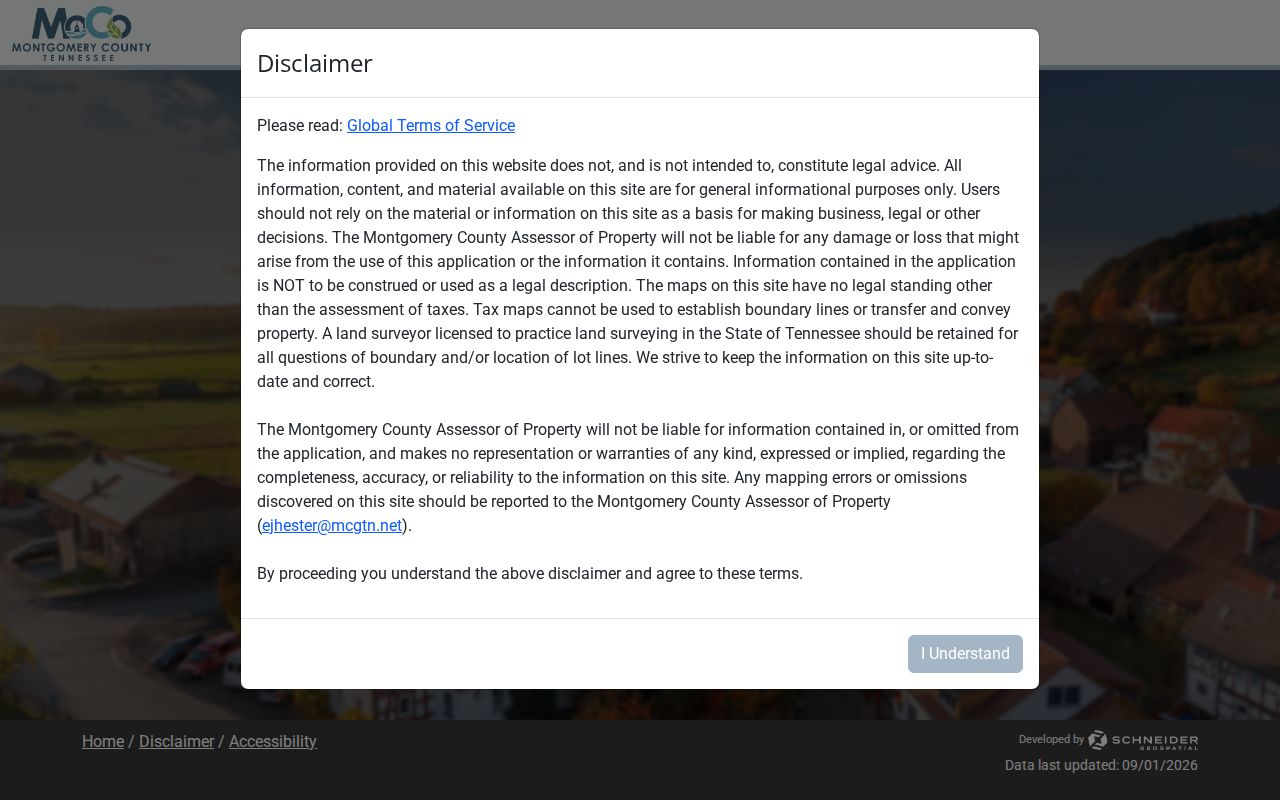
Those identifiers are the handoff to the Register, where the recorded instrument gives the legal transfer context that a property card alone cannot supply.
| Property-card field | Why it matters | Careful reading |
|---|---|---|
| Property Address | Identifies the physical parcel | It is not a present-occupant list. |
| Owner and Mailing Address | Shows assessment and tax-mailing fields | Mail may be sent somewhere else. |
| Parcel and legal fields | Connects maps, plats, and deeds | Keep them with the dated search. |
| Transfer panel | Supplies the deed research handoff | Confirm against the recorded instrument. |
- Parcel
- The Assessor's identifier for a piece of land and its record card.
- Index
- A finding tool that points to a record rather than replacing the original document.
- Criss-cross directory
- A historical reverse listing that may associate an address with a printed name for one year.
- Situs address
- The physical location of the parcel, distinct from a tax-mailing field.
TPAD is the Tennessee Comptroller's cross-county property interface. Its Montgomery County selection leads readers to the local Assessor data route; its documented fields show the kinds of identifiers worth preserving.
| TPAD search field | Type | Research note |
|---|---|---|
| County | Dropdown | Required before a county search; Montgomery is an external-site county. |
| Owner Name | Text | Accepts examples such as a full or initialed name. |
| Property Address | Text | Street number is optional in the published example. |
| Subdivision Name | Text | Supports a subdivision search term. |
| Parcel ID | Text | Direct parcel identifier. |
| Sale Date Start and End | Date inputs | Optional sale-date range. |
Clarksville Resident Address Labels
A Clarksville address may appear as a situs address, a mailing address, or a legal description. The situs address identifies the parcel on the ground. The mailing field tells the Assessor where tax correspondence goes and can be different. A legal description uses lot, block, subdivision, or metes-and-bounds language in a deed or plat. It can remain important even when an address changes or a lot is split.
Parcel means the identified piece of land in the assessment system. Situs address is the property location. Criss-cross directory means a reverse listing that may organize a historic volume by address. These labels let a reader compare records without turning one address field into a conclusion about a household.
The Regional Planning Commission map hub adds city, county, subdivision, ward, flood, growth-plan, annexation, and ZIP context. Use its maps for records geography, then verify delivery ZIPs with USPS and legal boundaries with the recorded plat or proper custodian.
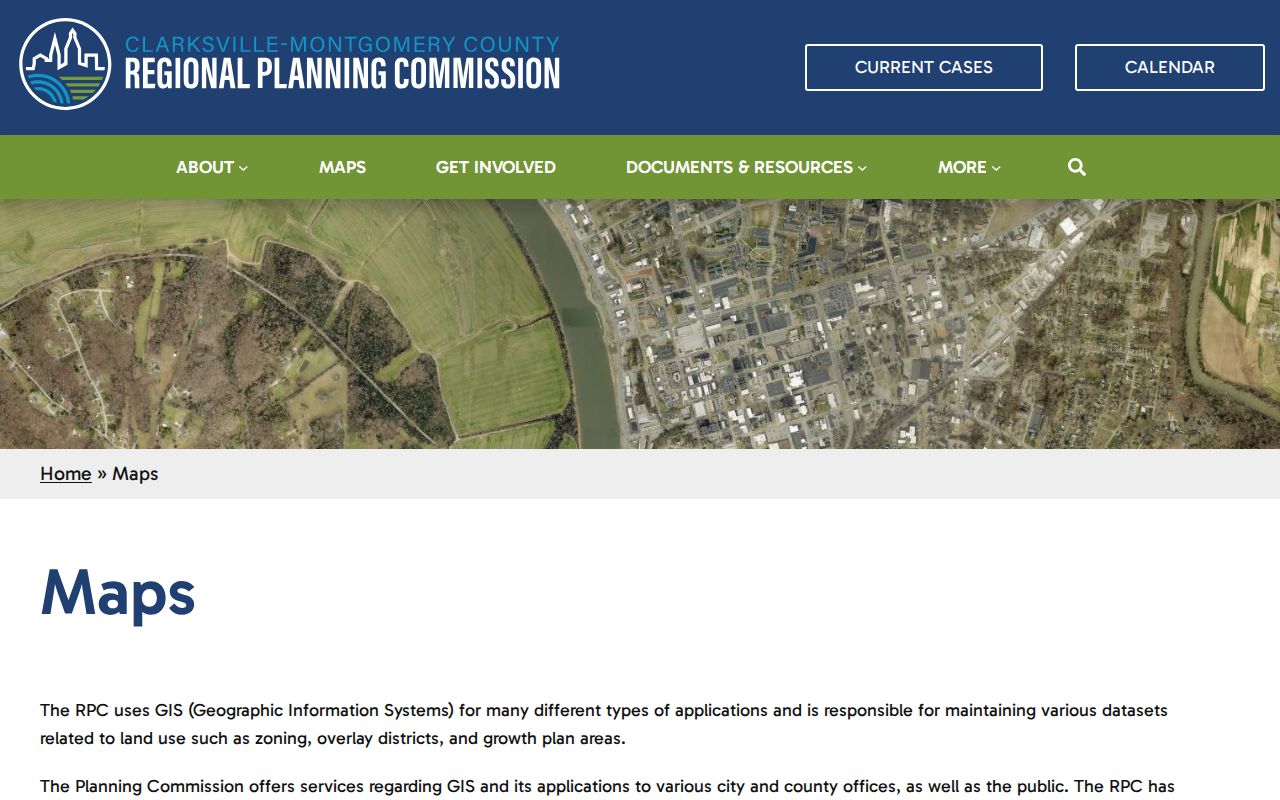
The map layers help a reader decide which office to ask next, but they do not replace a survey, deed, or postal address check.
Current Clarksville Resident Sources
Current sources are partial and should be read as purpose-specific records. The property card is useful for assessed ownership and parcel facts. Circuit and General Sessions search is useful for public case research within its stated web coverage. The voter tool confirms one person's registration context only after all required fields are supplied. County and state offices, not a single directory, hold the authoritative originals.
| Clarksville source | What it can confirm | Custodian | Access |
|---|---|---|---|
| Spatialest property card | Assessed owner, parcel, and transfer reference | Assessor | Free portal, counter, or phone |
| Register deed record | Named transfer parties and legal description | Register of Deeds | Paid remote service, office computer, copy routes |
| Voter registration lookup | One person's registration or absentee context | Tennessee elections system | Required county, name, birth month, and birth year |
| Circuit and General Sessions inquiry | Public party and case trail | Circuit Court Clerk | Free web inquiry after verification, clerk fallback |
| Library and Archives collections | Dated household and historical leads | CMCPL and Archives | Reading room, catalog, digital collection, staff help |
A result becomes more reliable when two independent records agree on a date, address, legal description, or case reference. For one-name work, the Clarksville resident lookup page separates those verification routes from broad address research.
Clarksville Resident Deed Trail
The Montgomery County Register of Deeds keeps recorded real-property instruments under a grantor and grantee system. That makes a property card the usual bridge for an address question. From the card, note the named parties, instrument date, book and page, legal description, and sale reference. Use that information to locate the instrument, then compare the legal description before following an earlier seller or buyer.
The Register's requesting-documents page shows the real access choices. Most remote online records use the paid US Title Search subscription. Free public search-room computers are available in the office. Copies can be requested in person, by mail with a self-addressed stamped envelope and payment, or by email with contact details and volume/page information. The office does not perform a full title search.
The Register access page is the source linked with this Clarksville residents directory example.
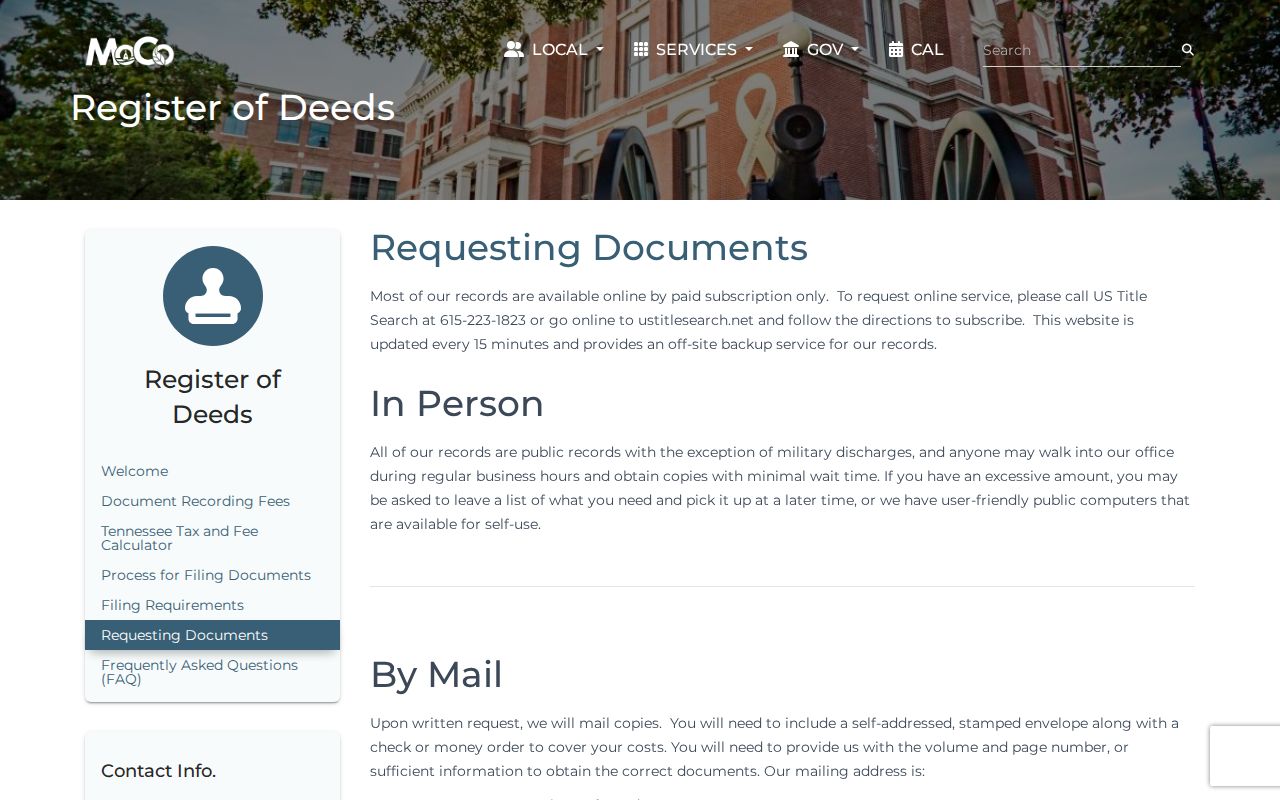
For a record outside the available web route, the same page points the reader toward the counter, mail, and email channels instead of treating a missing online hit as proof of absence.
| Register access route | What it offers | Important limit |
|---|---|---|
| Paid remote subscription | Off-site online record access | The county does not publish an anonymous free deed-index form. |
| Public office computers | Free in-person search route | Bring the party name or document reference. |
| Counter, mail, or email copy request | Copies of specifically located records | Mail and email requests need the county's stated locating details. |
Clarksville Resident Court Search
The Montgomery County Circuit and General Sessions web inquiry is a name-and-case tool, not a general resident list. County guidance places criminal and traffic information online from November 1, 1999 to current, while civil coverage begins May 1, 2006. A party match needs careful confirmation with the court type, filing year, case number, and other public context. Sealed, juvenile, expunged, and protected material may not appear.
The Circuit and General Sessions search accepts a party name or a case reference, court and case-type choices, and an optional year. It considers only the first ten query words, supports limited typo tolerance, and caps results at 2,500 rows. Older county court papers, Chancery minutes, and probate material are routed through the Archives, while city ordinance questions go to Clarksville Municipal Court.
The county court-search controls are shown in the official record-search image.
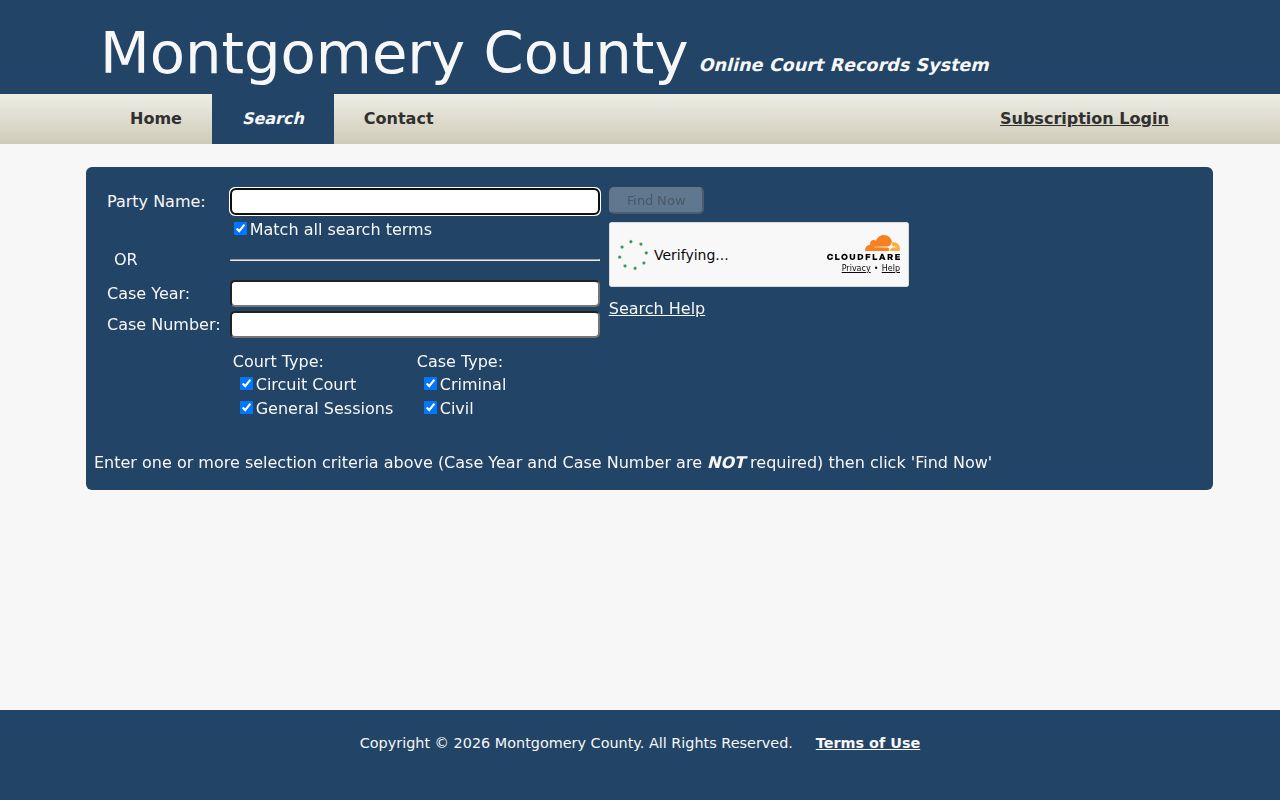
The picture is a search interface, not a promise that every historical or confidential case can be retrieved online.
Clarksville Resident Voter Lookup
Tennessee's voter registration tool is designed for a specific person. It requires a county, first name, last name, birth month, and birth year. It does not expose a public street browse, ZIP filter, block roster, bulk export, or a party-registration field. The result can support a narrow registration question, but it cannot establish that everyone at an address is a registered voter or that a missing result proves anything about residence.
Tenn. Code Ann. § 2-2-138 governs public voter records, with Social Security, driver-license, and Tennessee state-ID numbers excluded. The Montgomery County Election Commission provides counter, phone, mail, and online-registration channels. A confidentiality program participant may have protected voter information, so a gap must not be used to infer an address.
Note: County, name, birth month, and birth year are all required before Tennessee's voter lookup attempts a match.
Clarksville Resident Vital Access
Tennessee vital records are not an open name directory. The state Office of Vital Records maintains statewide birth, death, marriage, and divorce certificates. Under Tenn. Code Ann. § 68-3-205(e), births become publicly available after 100 years, while deaths, marriages, divorces, and annulments reach the public historic route after 50 years. Before those points, certified-copy eligibility, identification, and the type of record matter.
For current routes, use the Tennessee vital-record applications hub. Any county health department can issue a statewide-filed birth or death certificate to a qualified requester. Montgomery County marriage licenses begin with the County Clerk. Older material moves to the Tennessee State Library and Archives or Montgomery County Archives according to record type and date.
The state application hub illustrates the official route for vital certificate forms.
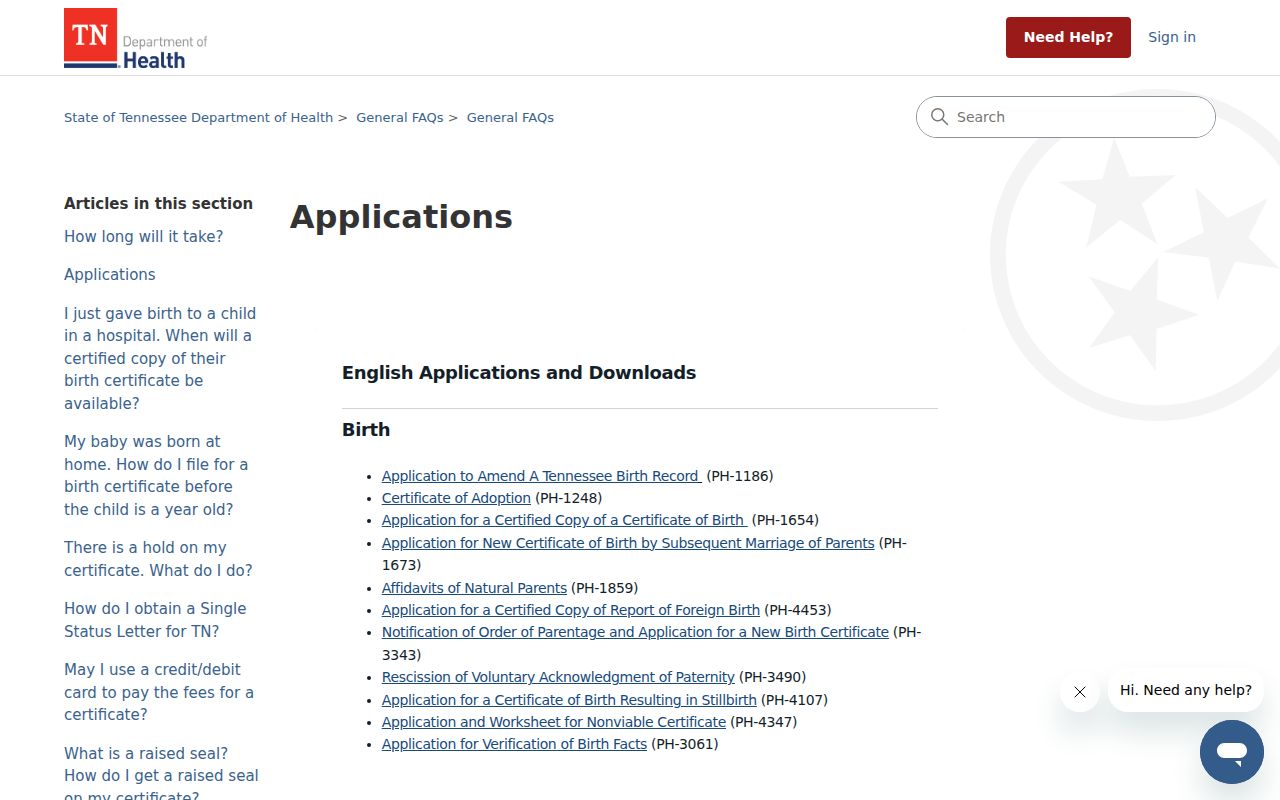
Using the application channel preserves the state’s entitlement and identification checks instead of treating a historical clue as a certified record.
Clarksville Resident Municipal Records
Clarksville Municipal Court handles city ordinance matters, including traffic and Building and Codes cases, separately from Montgomery County's Circuit and General Sessions courts. The city court clerk can help with the published online-record route, counter procedures, and municipal case questions. A city result is not a complete county case history, and a county case result is not a substitute for a city ordinance file.
The Clarksville Municipal Court page is the proper entry for city jurisdiction. The city’s FY 2025 report said its online records engine had been improved, a useful reminder to check the current city route instead of relying on an older county search instruction.
Clarksville’s municipal court page provides the public-facing route for the city layer.
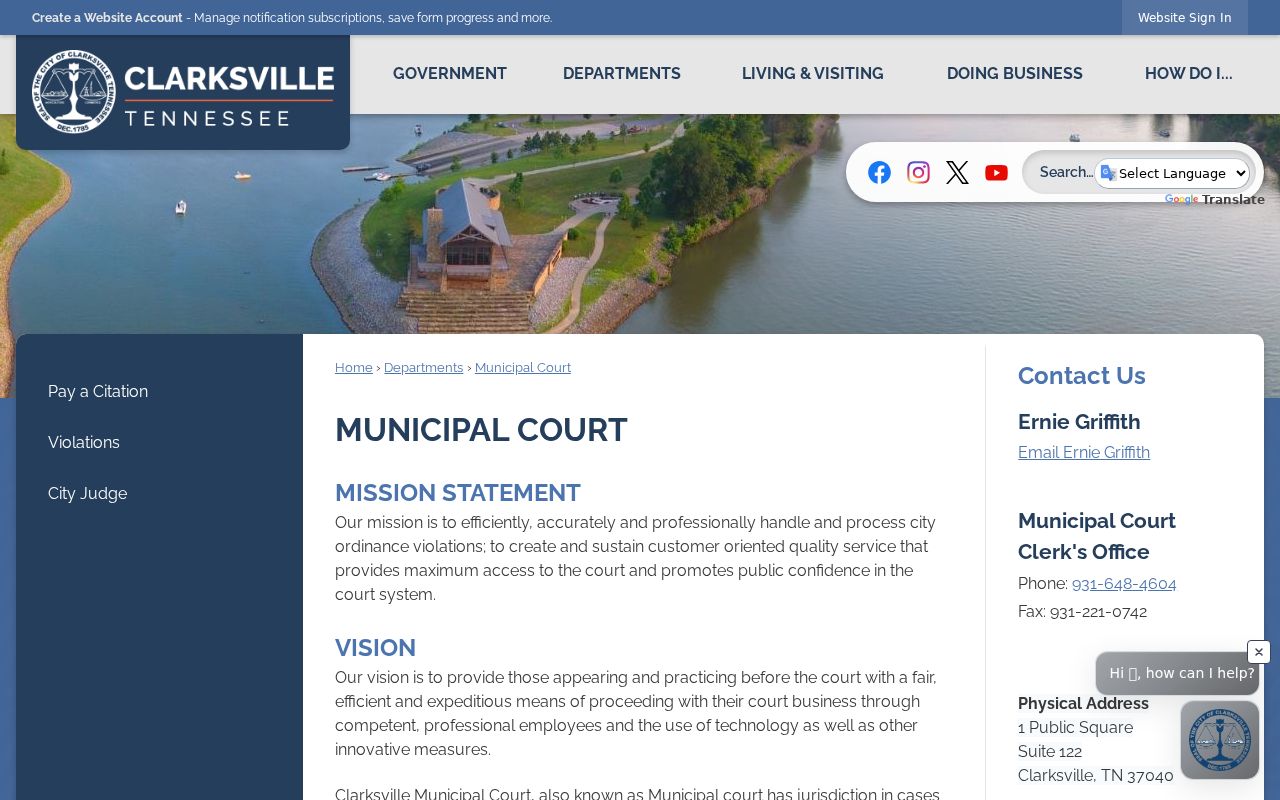
Matching the court to the case’s jurisdiction narrows the search and avoids treating separate systems as interchangeable.
Clarksville Resident Records Requests
The Tennessee Public Records Act, Tenn. Code Ann. § 10-7-501 et seq., especially § 10-7-503, gives a Tennessee citizen an inspection or copy route unless another law closes the record. It does not override sealed court material, protected vital information, or other specific confidentiality rules. Send a narrow request to the office that created or holds the record and include the address or name, date span, record category, and whether inspection or copies are preferred.
If a record cannot be made promptly available, the custodian must within seven business days provide it, deny it in writing with grounds, or explain in writing when production is expected. The Office of Open Records Counsel FAQ explains this fallback. The Register, Clerk and Master, City Clerk, Election Commission, and Archives each have different record roles, so choose the custodian before requesting.
Note: A focused request with an identifier and date range is easier for a Clarksville custodian to route than a broad request for all information about a person.
Clarksville Resident Archives Route
Montgomery County Archives gives Clarksville a deep historical route that a live portal cannot replace. Its documented holdings include deed books beginning in 1788, probate records beginning in 1796, County Court minutes from 1805, court case papers from 1808, Chancery minutes from 1840, and marriage records from 1838. Those dates describe holdings, not a guarantee that every page survived or is online. Still, they make a dated inquiry much stronger.
The Archives has a reference library, microfilm, a catalog, digital collections, and a reading room at 350 Pageant Lane, Suite 101-D. It is a real access channel for a historic property, court, marriage, or family question. Ask staff with the name spelling, date range, and record type, and try both surname-first and given-name-first forms in the catalog when a name is uncertain.
That local counter and reading-room route is especially useful when a court portal or subscription index does not reach the needed period.
Clarksville Resident Records Limits
Public records can be incomplete for ordinary reasons: a document may fall outside web coverage, an address may be protected through Tennessee Safe at Home, a case may be sealed, or an older record may sit in an archive. Tennessee Safe at Home provides a substitute address for eligible participants but does not erase preexisting records. The program is a reason to respect missing or protected information, not a route around it.
Use public records for personal, family-history, estate, property, civic, or safety questions. Tennessee’s anti-stalking statute is Tenn. Code Ann. § 39-17-315 and harassment is addressed in § 39-17-308. Do not use a Clarksville residents directory search to stalk, harass, intimidate, or harm any person.
Historic Clarksville Resident Directories
Clarksville’s historical directory shelf is valuable precisely because it is uneven. The Montgomery County Historical Society identifies Williams’ Clarksville Directory, City Guide and Business Mirror for 1859–1860. Other documented leads include a 1895 Clarksville directory and selected 1911 through 1959 city-directory volumes. A volume is a dated snapshot of how a person, address, business, or household was printed, not a promise of ownership or continuous residence.
The Brown Harvey, Sr. Genealogy Room at the Clarksville-Montgomery County Public Library and Montgomery County Archives are the local places to ask about shelf, microfilm, database, yearbook, obituary, and directory access. The Clarksville city directory page examines those collections, entry clues, and year-to-year tracing in detail.
The county marriage-record page is another official local history access surface, especially where a documented event helps distinguish same-name people.
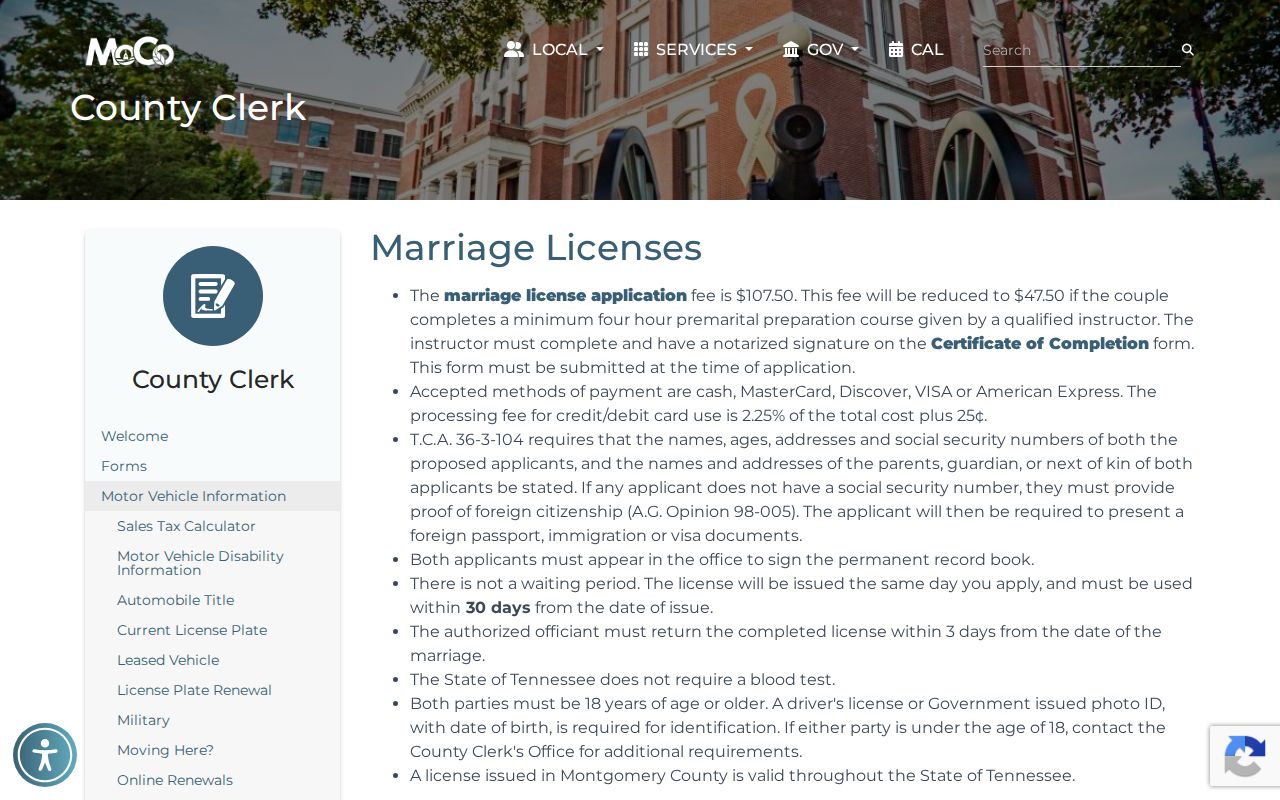
A marriage route can supply an event or record-request channel, but it should remain separate from a directory or property conclusion.
Clarksville Resident Deed Alerts
Montgomery County warned in May 2024 about “Clerk’s Property Office” letters seeking roughly $89 for deed information available free or for less than $1 from the local office. The county said the solicitation was not from the Register. A real deed-copy question should go back to the Register’s published counter, mail, email, or subscription channels, never to a number or web address printed in an unexpected letter.
The county also points residents to MyLandAlert, a free service that sends email or text notice when a document is recorded with a subscribed name. It can help a person notice a filing but cannot prevent fraud or change public records. Compare any notification with the official instrument and ask the Register about the legitimate copy route.
The MyLandAlert interface is the county-linked notification option for a Clarksville residents directory property concern.
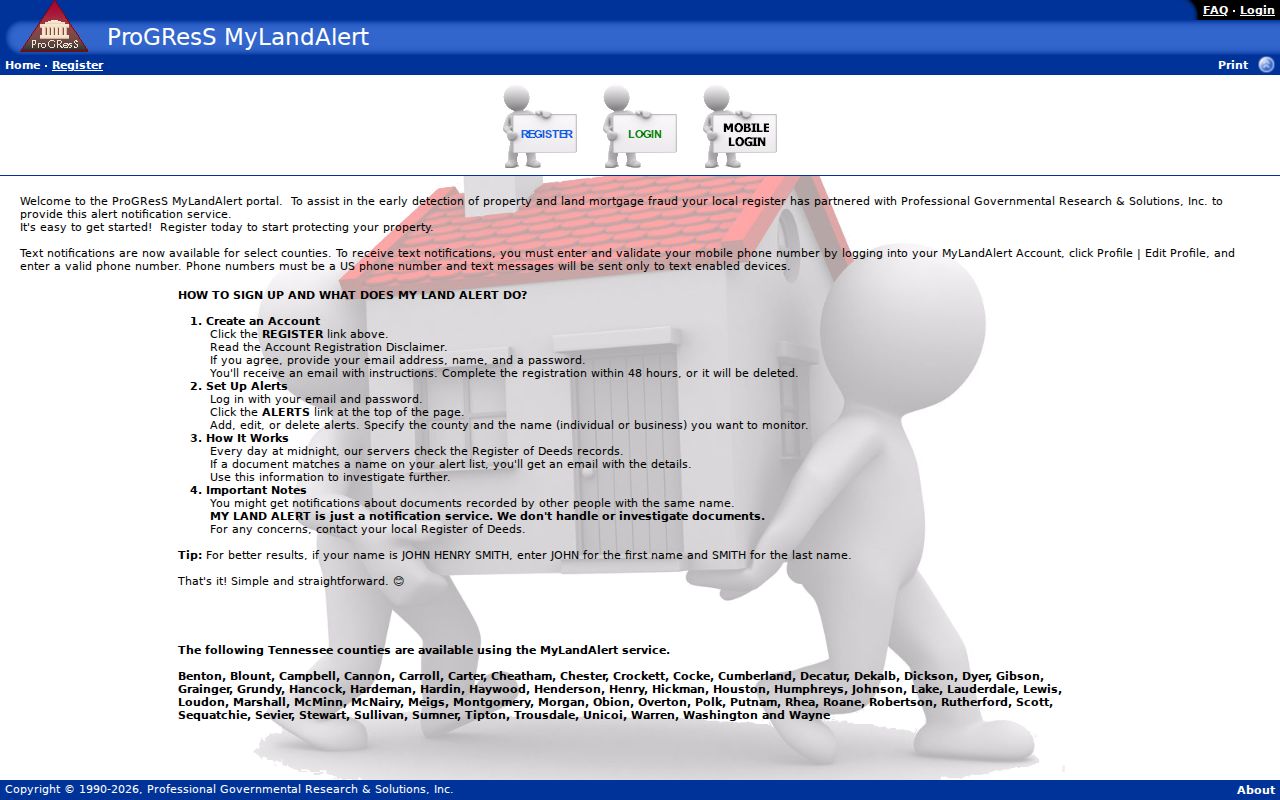
The alert is a prompt to verify a recorded document through the custodian, not evidence about a property or person by itself.